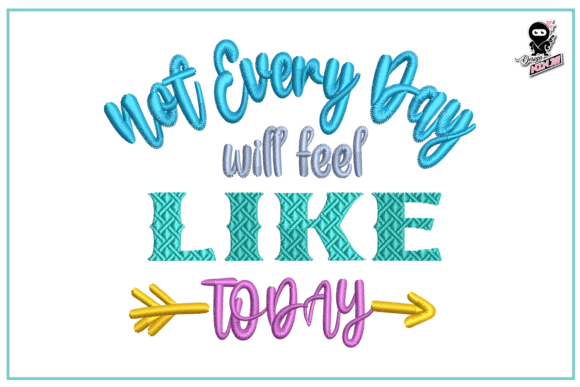
Not Every Day Feels Like Today: A Designer’s Review
In the world of machine embroidery, finding a design that balances emotional resonance with technical feasibility is a constant challenge. As a designer who frequently tests new files for both personal projects and client work, I look beyond the preview image. I look at how a design will behave under the needle, how it translates to different fabric textures, and whether it adds genuine value to a finished product. This review evaluates Not Every Day Feels Like Today, a motivational quote embroidery design categorized under Family Quotes. I am analyzing this piece not just as a decorative element, but as a viable asset for small business owners, Etsy sellers, and crafters looking to create meaningful, sellable items.
First Impressions and Visual Personality
The title itself sets a specific mood: reflective, honest, and grounded. When you first encounter the layout of Not Every Day Feels Like Today, the visual personality leans toward modern minimalism with a touch of typographic warmth. It does not scream for attention; instead, it invites the viewer to pause. For an embroidery project, this subtlety is crucial. Designs that are too busy often lose their message when stitched into fabric, especially on apparel or home decor items where the texture of the material competes with the thread.
The design feels best suited for custom apparel like sweatshirts and t-shirts, where the message can be centered prominently. It also translates well to softer goods such as tote bags and pillow covers. The typography appears clean enough to maintain legibility even when subjected to the slight distortion that can occur during the stitching process. This makes it a strong candidate for personalized gifts intended for people going through transitional phases—new parents, graduates, or anyone navigating a difficult period. The emotional weight of the quote pairs naturally with the tactile comfort of handmade textiles.
Real-World Application: From Digital File to Finished Product
Let’s imagine a practical scenario. You are preparing inventory for a holiday market or updating your Etsy shop for the upcoming season. You decide to use Not Every Day Feels Like Today on a heavy cotton canvas tote bag. This is a classic combination, but execution matters. The design needs to stand out against the rougher weave of the canvas without overwhelming it.
In this context, the stitch density becomes a critical factor. If the design relies heavily on dense fill stitches, it might become stiff and uncomfortable to carry. However, if the file utilizes a mix of satin stitch for outlines and lighter running stitch or sparse fill for background elements, it will drape better and feel more premium. For an Etsy seller, this distinction directly impacts customer reviews. Buyers appreciate items that look professional and feel comfortable, not rigid or bulky.
Another strong use case is baby embroidery. Applying this design to a muslin blanket or a onesie requires careful consideration of fabric stretch. The quote offers a comforting message to new parents, acknowledging that parenting is hard. To ensure the design holds up after multiple washes, the underlying structure of the embroidery file must be stable. This is where testing on scrap fabric is non-negotiable. You need to see how the threads interact with the natural elasticity of baby clothes to prevent puckering.
Where Caution Is Required
While Not Every Day Feels Like Today has broad appeal, there are specific scenarios where a designer should exercise caution. Not every surface is created equal, and some applications may compromise the integrity of the design.
- Small Hoop Sizes: If the design is large, attempting to fit it into a smaller hoop can lead to awkward placement on curved surfaces like caps or the cuffs of sleeves. Ensure the hoop size matches the dimensions of your target product.
- Textured and Stretchy Fabrics: Materials like fleece, thick wool, or highly stretchy knits can distort fine details. If the typography in the design includes thin lines or intricate serifs, these may break or blur on textured backgrounds. Always test on the actual fabric before committing to a full production run.
- Dense Stitch Areas: If the design features large blocks of solid color, it may require additional stabilizer support to prevent sinking into the fabric. On dark fabrics, this is particularly important to avoid a "muddy" appearance where the backing shows through.
- Frequent Washing: For items like aprons or kitchen towels that undergo rigorous laundering, the durability of the thread colors and the strength of the stitch anchor points are vital. Run a wash test to ensure the design does not unravel or fade significantly.
Impact on Brand Consistency and Customer Trust
For commercial embroidery projects, consistency is key. Using a design like Not Every Day Feels Like Today allows you to build a cohesive brand narrative around mental health awareness, self-care, or family support. When customers see a consistent quality in your handmade products, trust increases. They are more likely to return and recommend your shop to others.
The design’s versatility extends to digital product previews and printable mockups. High-quality images of this design on various backgrounds—neutral tones for a minimalist aesthetic, or vibrant colors for a bold statement—can help attract clicks on social media platforms. However, remember that digital representation is not always accurate. The way light hits satin stitch in a photo differs from how it looks in person. Use realistic lighting in your mockups to set accurate expectations for buyers.
Practical Designer Notes for Implementation
Before adding Not Every Day Feels Like Today to your production workflow, consider these essential steps:
- Test on Scrap Fabric: Never assume a design will work perfectly on the final material. Test it on scraps of the same fabric type and weight.
- Check Thread Color Contrast: Ensure the chosen thread colors provide sufficient contrast against the fabric. Low contrast can make the quote illegible, defeating the purpose of the design.
- Review Stitch Density: Look closely at the file structure. Are there areas where the needle penetrates the fabric too frequently? Adjusting density settings in your software can sometimes improve the outcome.
- Confirm Licensing: If you plan to sell finished items, verify the license terms associated with the digital embroidery file. Some licenses allow commercial use of physical products, while others restrict resale. Understanding these terms protects your craft business from legal issues.
- Inspect Small Details: Zoom in on the digital preview. Are there tiny corners or thin lines that might get lost in stitching? Simplifying or adjusting these elements beforehand can save time and reduce waste.
Final Verdict
Not Every Day Feels Like Today is a thoughtful addition to any embroiderer’s library. It bridges the gap between artistic expression and practical application. Whether you are creating a one-of-a-kind gift for a friend or stocking shelves for your small shop product line, this design offers a reliable foundation for high-quality work. Its strength lies in its simplicity and emotional clarity, making it accessible to a wide audience. By paying attention to fabric choice, stabilizer selection, and stitch quality, you can transform this digital asset into a cherished finished product that resonates with recipients on a deeper level.
For designers and entrepreneurs, the key is to view the design not just as text on a screen, but as a tactile experience waiting to happen. With careful preparation and realistic expectations, Not Every Day Feels Like Today can elevate your embroidery project from a simple craft to a meaningful piece of wearable or home art.