Cute Panda Through the Wall Embroidery Review
As an embroidery designer who spends weekends hunched over a table at local craft fairs, I have learned one hard truth: customers do not buy files. They buy finished products that look good in person and feel worth the price tag. When I see a new design file land in my inbox, my first question is never about stitch count or file format. It is about marketability. Will this sit on a shelf next to three other similar items and still catch the eye? Does it translate well from a digital screen to physical fabric?
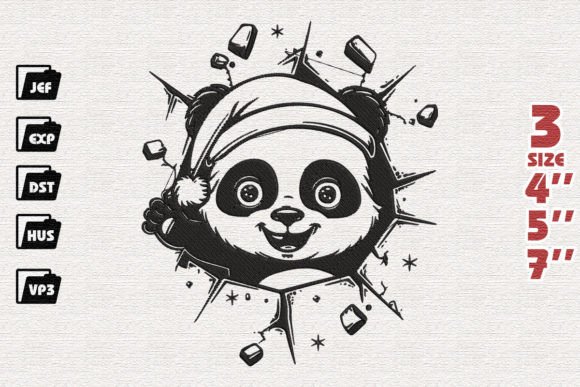
This week, I am reviewing a design titled Cute Panda Through the Wall. At first glance, the title suggests whimsy, playfulness, and a bit of humor. For craft fair sellers, Etsy shop owners, and boutique makers, these are powerful keywords. The description promises charm and fun accents for t-shirts, towels, and home decor. But does it hold up under the scrutiny of production? Let’s break down how this machine embroidery design performs as a craft fair product.
First Impressions and Visual Appeal
The concept of a panda peeking through a wall immediately signals a modern, playful aesthetic. It is not traditional, rustic, or overly elegant. Instead, it leans into the "cute" factor that dominates the Baby Animals category. In a crowded booth, visual simplicity is key. A complex, multi-colored scene can get lost in the noise of a busy marketplace. However, a bold character breaking through a boundary creates a focal point.
From a branding perspective, this design feels premium yet approachable. It works well for brands targeting parents, young professionals, or anyone with a love for whimsical home goods. The "through the wall" aspect adds a layer of depth that makes the design feel dynamic rather than flat. When photographed for an Etsy listing or social media, this kind of interaction between the subject and the background tends to perform well because it tells a mini-story without words.
Product Application and Versatility
The true test of any embroidery file is its versatility. Can it be stitched onto multiple product types without losing its impact? Here is where Cute Panda Through the Wall shows strong potential for small shop products.
- Tote Bags: This is likely the highest-volume seller for most vendors. Stitched on a canvas tote, the panda becomes a statement piece. The contrast between the sturdy fabric and the soft, cute character creates a balanced look. It appeals to shoppers looking for functional yet adorable accessories.
- Kitchen Towels and Aprons: As noted in the description, this design fits perfectly in the kitchen. On a tea towel, it adds a touch of personality to a mundane item. For apron embroidery, placing the panda near the pocket or chest area draws attention to the wearer. It is a great conversation starter at a market stall.
- Fabric Pouches and Small Goods: For lower-priced impulse buys, stitching this on small zippered pouches or pencil cases works well. The design’s compact nature means it doesn’t overwhelm smaller surfaces, making it ideal for digital sellers offering printable mockups or ready-to-ship items.
- Hats and Caps: Curved surfaces can be tricky, but if the design is scaled correctly, a panda peeking out from the side of a cap could be a unique twist on standard logo placements. It breaks the monotony of typical sports caps.
- Patches: If the design allows for clean edges, it could be produced as an embroidered patch. Patches are highly popular among DIY enthusiasts and can be sold separately or attached to jackets and bags by the end user.
Production Practicality and Design Analysis
Before committing to a batch run, every experienced designer knows the importance of testing. While the description highlights the charm of the design, we must consider the technical realities of commercial embroidery.
Stitch Density and Detail: Pandas have distinct black and white features. In embroidery, these high-contrast areas can sometimes cause issues if the stitch density is too low (resulting in gaps) or too high (causing fabric puckering). You need to inspect the stitch density closely. Are the black areas dense enough to cover the base fabric completely? Is the white thread opaque enough to stand out against dark backgrounds? Testing on scrap fabric is non-negotiable here.
Size and Scaling: The design needs to be evaluated for scalability. Will it lose clarity if reduced to fit a small pouch? Conversely, will it become too large and unwieldy on a standard tea towel? Ensure the hoop size accommodates your intended product dimensions. If the design relies on tiny details to convey the "peeking" action, those details might disappear at smaller sizes, leaving just a blob of black and white.
Thread Colors: The success of this design hinges on thread colors. You will likely need high-quality black and white threads, possibly with a skin tone or subtle shading if the panda has facial features. Using cheap polyester thread may result in a dull finish that fails to capture the "charm" promised in the description. Consider using rayon for a slight sheen that catches light at a craft fair booth.
Stabilizer and Fabric Considerations
Different fabrics react differently to embroidery. On a woven cotton tea towel, you will want a cut-away stabilizer to prevent distortion over time. On a knit t-shirt, a tear-away or wash-away stabilizer might be sufficient, depending on the weight of the knit. Always check the fabric texture; rougher fabrics like burlap may hide fine details, while smooth silks require delicate handling to avoid pulling. Creating at least one real mockup on your actual product material is the only way to confirm the final look.
Selling Strategy for Craft Fairs and Online
How does this design drive sales? The key is positioning. Because the design is whimsical and fun, it appeals to gift buyers. Think about bundling. A set of matching tea towels and a tote bag featuring the same panda design creates a cohesive gift set that looks professional and increases average order value.
For online sellers, invest in high-quality photos. Show the panda on different colored backgrounds to demonstrate versatility. Use printable mockups during the planning phase to visualize placement, but always back them up with real-world photos. Customers can spot a fake image instantly. Authenticity builds trust.
When displaying at a craft fair, use lighting to your advantage. The contrast of the panda design will pop under bright booth lights. Place these items at eye level. The "cute" factor triggers an emotional response, which is often the deciding factor in impulse purchases. Make sure your signage reflects the fun nature of the product—words like "Whimsical," "Playful," and "Charming" align well with the design's mood.
Final Verdict
Cute Panda Through the Wall is a strong contender for any maker looking to expand their catalog with trendy, animal-themed goods. It offers a balance of simplicity and character that translates well across various product types, from tote bag designs to kitchen decor. Its primary strength lies in its broad appeal and photogenic quality.
However, success depends on execution. Pay close attention to thread contrast, stitch density, and proper stabilization. Test rigorously before mass production. Confirm your commercial licensing terms to ensure you are legally allowed to sell finished items made from this digital embroidery file. If you handle the technical details with care, this design has the potential to become a bestseller in your handmade shop or a standout hit at your next craft fair.